
When Long-Term Thinking Meets Development Management
July 20, 2026

Challenges in planning and development emerge gradually as information increases, stakeholder groups expand and decisions become spread across multiple disciplines. What began as a clear strategy at the outset can become increasingly difficult to maintain as a project progresses through planning, design and construction.
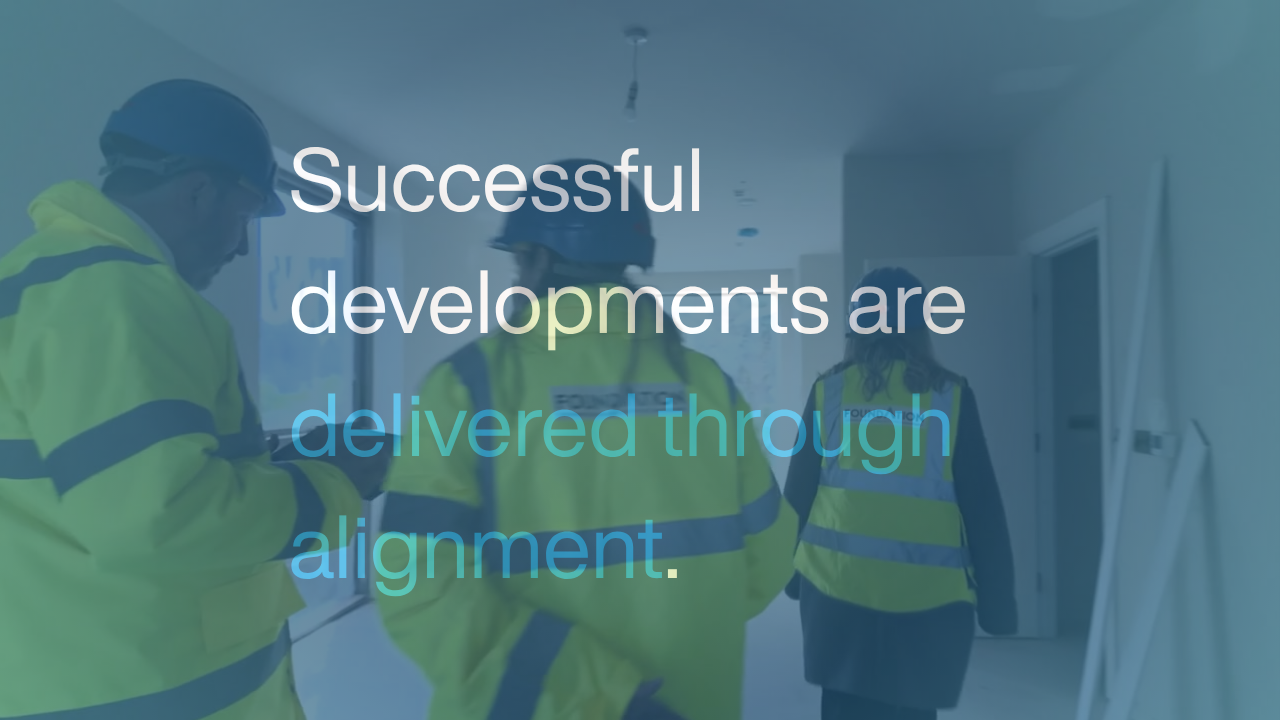
Successful developments are delivered through alignment.
"Communication is critical to project management."— Mary Rose O'Donnell
There is often an assumption that alignment happens naturally once the right consultants have been appointed and the project team is in place. Experience suggests otherwise. Architects, engineers, planners and contractors each bring valuable expertise, but they also approach a project from different perspectives. Their priorities are different, their responsibilities are different and their focus is naturally directed towards their own discipline.
As projects become more complex, maintaining alignment becomes an active process rather than an automatic outcome.
Communication plays a central role in that process. Not because communication itself is the objective, but because informed decisions rely on the timely exchange of accurate information. When information becomes delayed, fragmented or disconnected from the wider project context, momentum begins to slow.
In practice, maintaining momentum rarely comes down to formal reporting alone. Some issues are resolved through project meetings. Others require direct conversations between consultants. In some cases, a single phone call can prevent a misunderstanding from becoming a programme delay several weeks later.
The objective is always the same: ensuring that the right information reaches the right people at the right time so that decisions can be made based on accurate information.
"One of the biggest challenges is getting different disciplines to think as one team throughout the project." — Robert Keran
There is often an assumption that collaboration happens naturally once the right consultants have been appointed or multiple disciplines are involved in the same project. Experience suggests otherwise.
Architects, engineers, planners and contractors may all be working towards the same project outcome, but they approach decisions from different perspectives and priorities. Even within large multidisciplinary organisations, teams can still operate in silos.
Alignment requires more than participation. It requires a project manager maintaining visibility across the entire project and understanding how decisions in one area affect outcomes elsewhere.
This is one of the reasons active delivery management remains important throughout a project's lifecycle. Without that oversight, information can become fragmented, responsibilities can become blurred and decisions can gradually move away from the original objectives of the development.
"Project management is not about doing everybody else's job. It's about making sure the right people remain accountable for their own." — Robert Keran
Maintaining accountability is equally important.
There can be a temptation to step in and resolve issues directly, particularly when progress is under pressure. In practice, that approach can weaken accountability across the wider team.

As Robert explained, responsibility should remain with the party best placed to resolve the issue. The role of project leadership is to maintain momentum while ensuring ownership stays clear.
Successful delivery depends on that clarity. When responsibilities remain with the appropriate consultant, contractor or stakeholder, decisions happen faster, actions are completed more effectively and projects retain momentum.
This becomes particularly important when managing risk.
Risk management is often associated with registers, reports and formal project controls. These tools are important, but their value comes from continuous monitoring and active engagement rather than their existence alone. Risks evolve as projects progress. New information emerges. Assumptions change. Decisions made six months earlier may need to be revisited as circumstances develop.
Effective delivery relies on maintaining visibility of those changes and ensuring that emerging issues are identified before they begin affecting programme, cost or project objectives.
"Our role is to make all of the potential challenges known at the earliest stages so that they can be dealt with in advance." — Robert Keran
This is where Foundation’s development management service provides an additional layer of value.
While traditional project management focuses on coordinating delivery, development management sits closer to the client side of the process. It helps maintain alignment between project objectives, commercial considerations and delivery decisions throughout the lifecycle of a development.
For clients without an in-house development team, this creates a single point of oversight across planning, design, funding, statutory processes and delivery. Decisions can be assessed in the context of the wider project rather than as isolated events.
Successful developments are rarely defined by a single decision, consultant or project milestone.
Successful delivery is the process of ensuring all decisions continue to point in the same direction and keep projects moving forward.


.svg)
.jpg)

.svg)