
From Inception to Completion - What Carries Through from Planning into Delivery
April 29, 2026
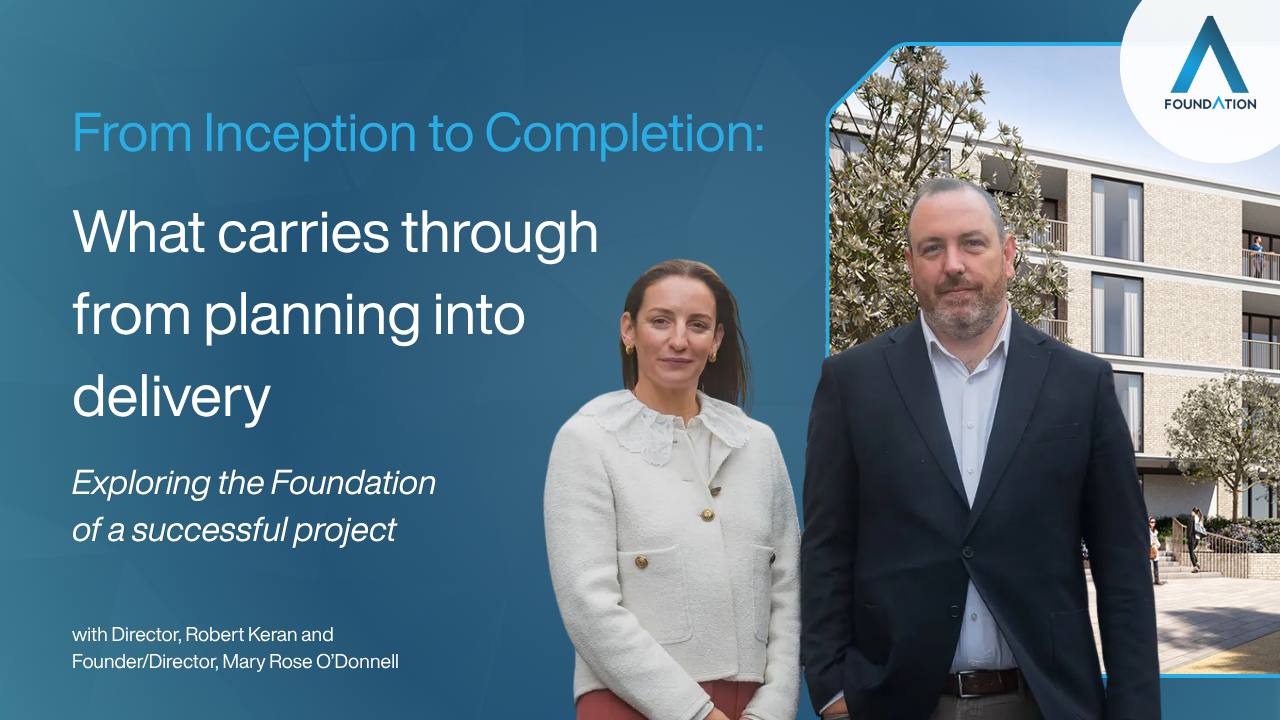
Projects remain controlled when the thinking behind them is carried all the way through from inception, project set-up and planning into delivery, with the same level of oversight applied at every stage.
We are Foundation
Foundation is led by Mary Rose O’Donnell and Robert Keran, whose combined qualifications and experience span multiple disciplines - planning, legal, project management, contracting, consultancy and building performance. Robert’s background in planning, project management and law brings a detailed understanding of statutory compliance and contract structures, while Mary Rose’s experience working on both the contractor and developer side allows her to interrogate how projects are actually delivered on site. That combination provides full visibility across both strategy and execution, rather than a single-discipline or siloed view.
We Anticipate. We Facilitate. We Deliver.
The Real Value Add
Planning may be secured, a project ready to move forward, but the real value is in the thinking behind those outputs. The ROI goals of the investor, the constraints that shaped the scheme, the decisions that balanced risk, and the guidance applied at the outset are what allow a project to move forward with clarity once delivery begins.
“when a project is handed over from a different team] you can lose months just trying to understand how you got to that point.” — Mary Rose O’Donnell
At the outset of a project, the focus is on understanding the opportunity properly. That means assessing both risk and viability early, rather than shaping a narrative to secure the job. The approach is direct, identifying where a site works, where it does not, and what would need to change to make it viable. That includes advising against a project if necessary. Integrity at that stage matters more than securing a fee, because it is what gives the client confidence in every decision that follows.
When the thinking is carried through, time is saved. Decisions hold because their intent is already understood. Information moves between teams without losing quality, and the project progresses without needing to pause and re-establish direction.
Continuity from the outset protects time and cost throughout the project. Maintaining that continuity is a structural decision. Keeping planning and delivery connected ensures that early decisions continue to guide the project as it progresses, without dilution or reinterpretation.
Full Financial Disclosure and Mitigating Risks
That early stage also defines the level of visibility the client has across the project. Full financial clarity is established from the beginning, including costs that are often missed or deferred, such as home bonds, insurance requirements and local authority levies. This ensures that decisions are made with a complete view of cost, rather than a partial picture that becomes clearer later.
External risks are also identified at this stage, including infrastructure constraints, planning risk, and stakeholder challenges, allowing them to be addressed in context rather than retrospectively.
At Graymount in Howth, that was established from the beginning. The project started at site stage and moved through planning into delivery with the same individuals responsible throughout. The decisions made early were carried forward directly, without the need to revisit or reinterpret them later. There was no point where the project needed to be re-explained to a new team, and no loss of momentum as it moved into delivery.
Managing Compliance and Alignment
Statutory requirements such as fire strategy, DAC compliance, planning conditions and sustainability targets. These are managed consistently from the outset, allowing the project to move forward with clarity because the thinking behind it remains directly connected to its delivery.
At Cricklewood in London, the starting point required a different emphasis. Planning was already secured, so the focus shifted to maintaining alignment as the project moved into a complex delivery phase with multiple stakeholders.

That level of involvement is what maintains alignment at that stage. With multiple consultants and moving parts, progress depends on clear communication, direct accountability and consistent follow-through. Alignment is maintained.
“We're looking for the risk and the opportunity throughout the project lifecycle to give maximum visibility and transparency for the client.” — Robert Keran
Maintaining that position requires continuous involvement. Information is actively managed, checked and reinforced as the project progresses, ensuring that decisions remain aligned with the original intent, actions, owners and deadlines are tracked in real time, visible to all.
”Collaboration and teamwork are essential, and embodying a sense of collective ownership in the project. At Foundation, we strive to bring this approach to every project, every day.” — Robert Keran
The Results!
For clients, the result is a project that remains stable and predictable as it moves forward. Programme, cost and quality stay on track because they are managed consistently, not recalibrated part way through delivery. Decisions hold because the thinking behind them has been carried from start to finish.
When continuity of thinking, knowledge and decision making is maintained throughout, risk is mitigated, and the momentum of the project is maintained.


.svg)

.jpg)

.svg)